
J.B. Hunt
Load Management
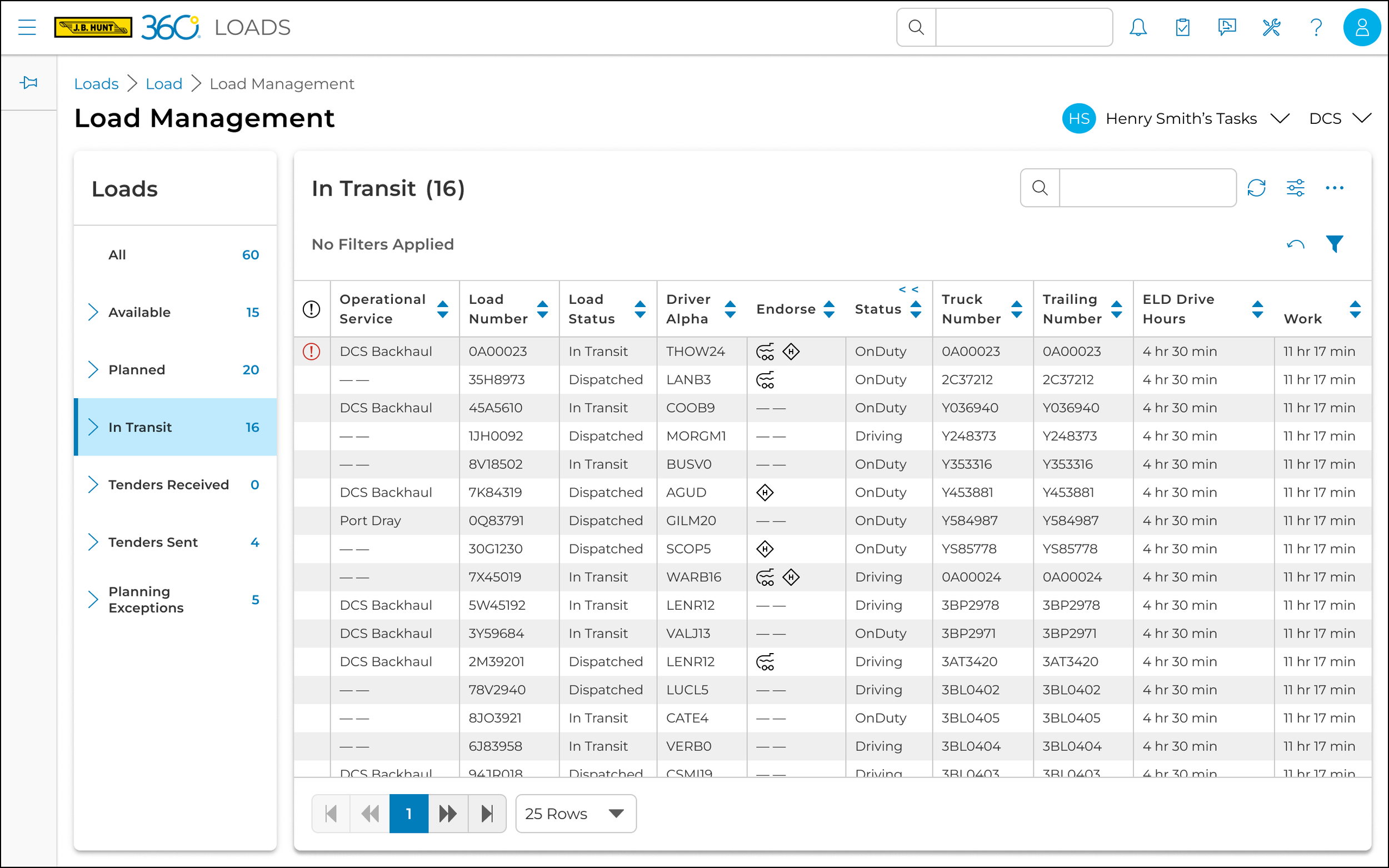
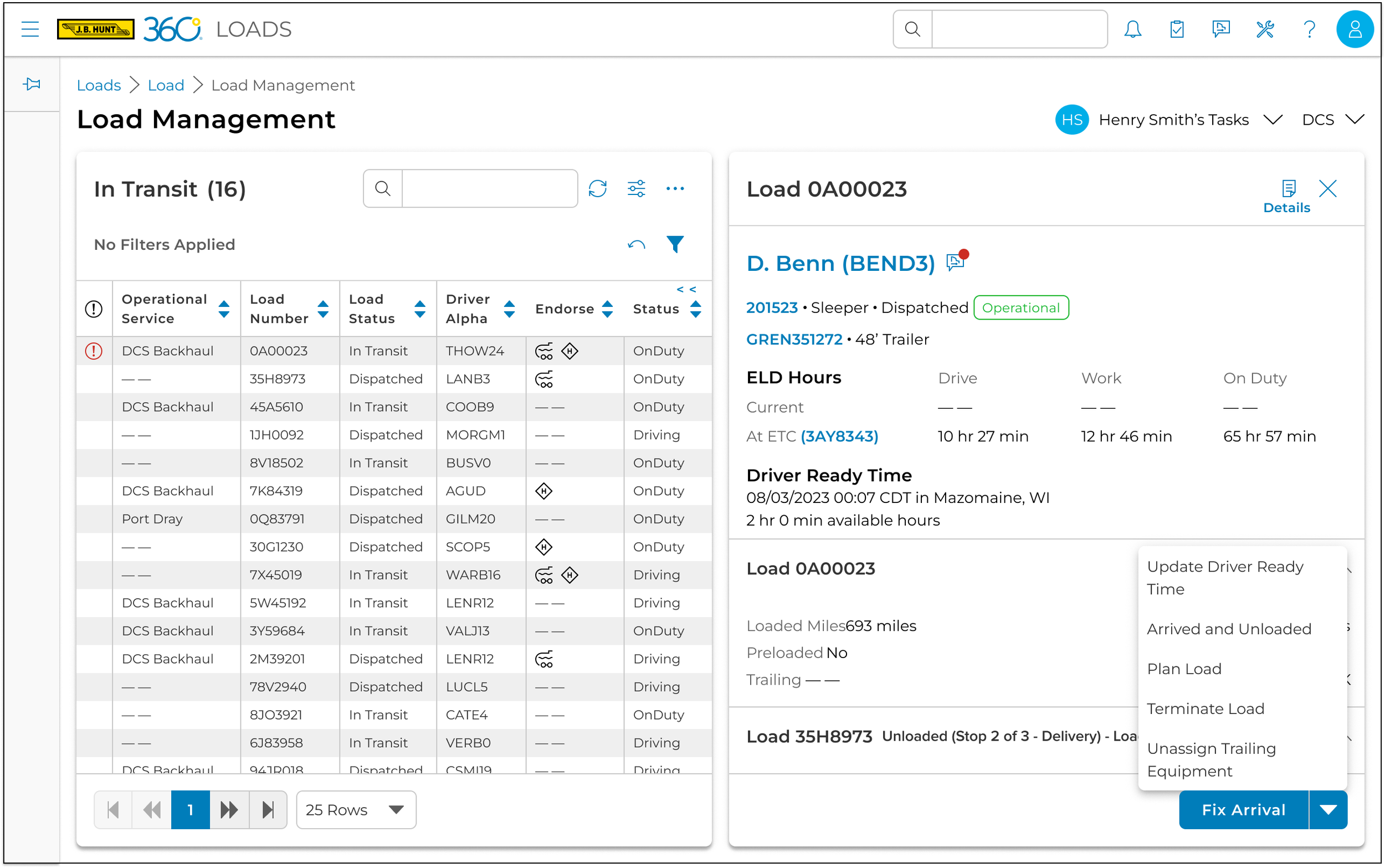
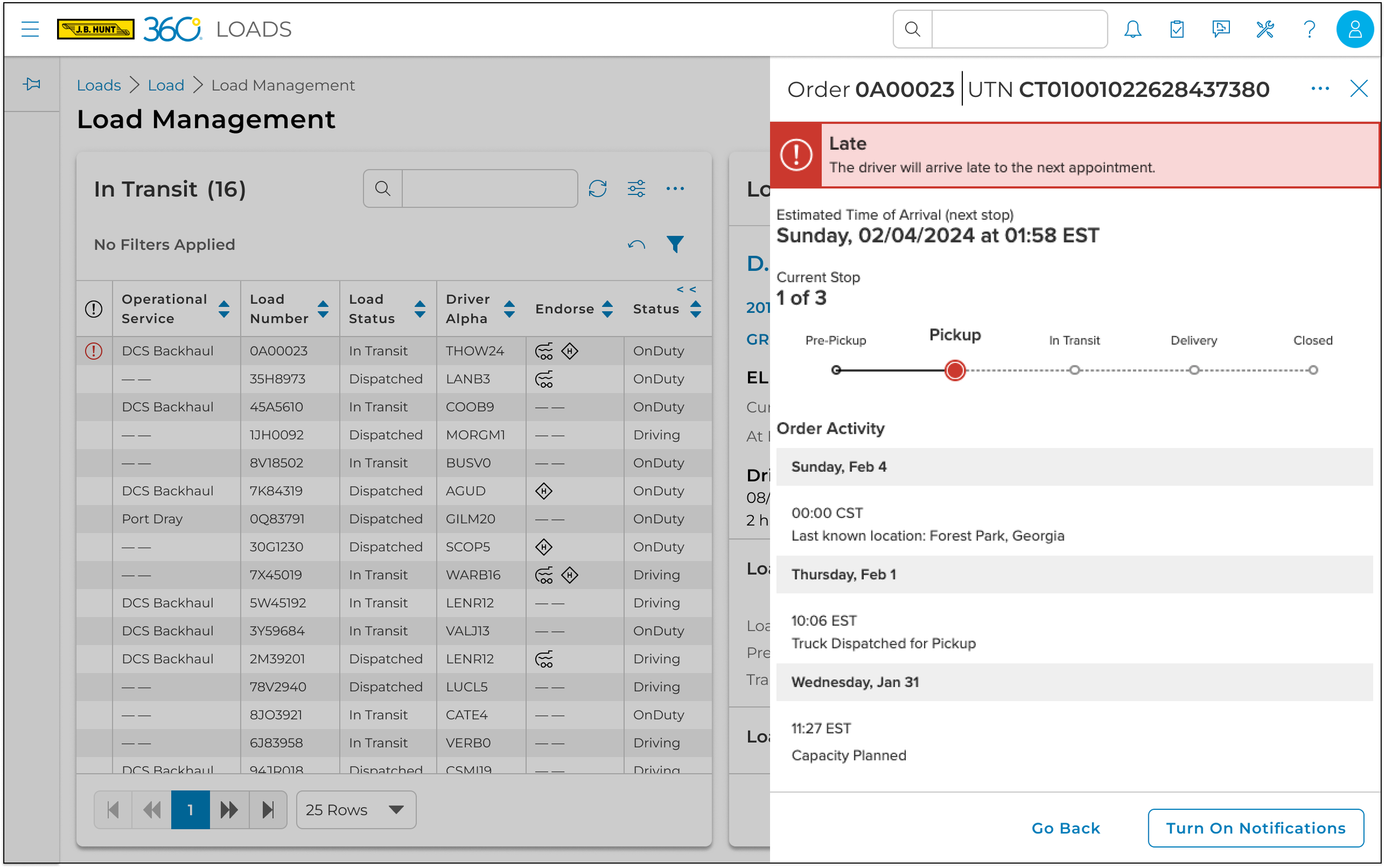
At J.B. Hunt, Transportation Managers and Dispatchers handle the end‑to‑end planning and management of shipments. Our team needed a modernized way to display load and driver information, plan and terminate loads, update driver times and locations, and track shipments in real time. Because multiple product teams were contributing to the same platform, the project required extensive cross‑team collaboration to align workflows, unify requirements, and transform a complex legacy system into a streamlined, modern experience.

Case summary
Product vision
Load Management will evolve from a legacy system into a modern, intuitive platform that enables Transportation Managers and Dispatchers to plan, track, and manage shipments with greater speed and confidence. The redesigned experience will prioritize accessibility by meeting established standards, ensuring the interface supports a wide range of users and reduces friction across key workflows. By streamlining interactions, modernizing the visual design, and improving overall performance, Load Management will become a faster, clearer, and more efficient tool than its predecessor, ultimately delivering a user‑centered system that enhances operational efficiency, reduces errors, and supports scalable growth.
User needs
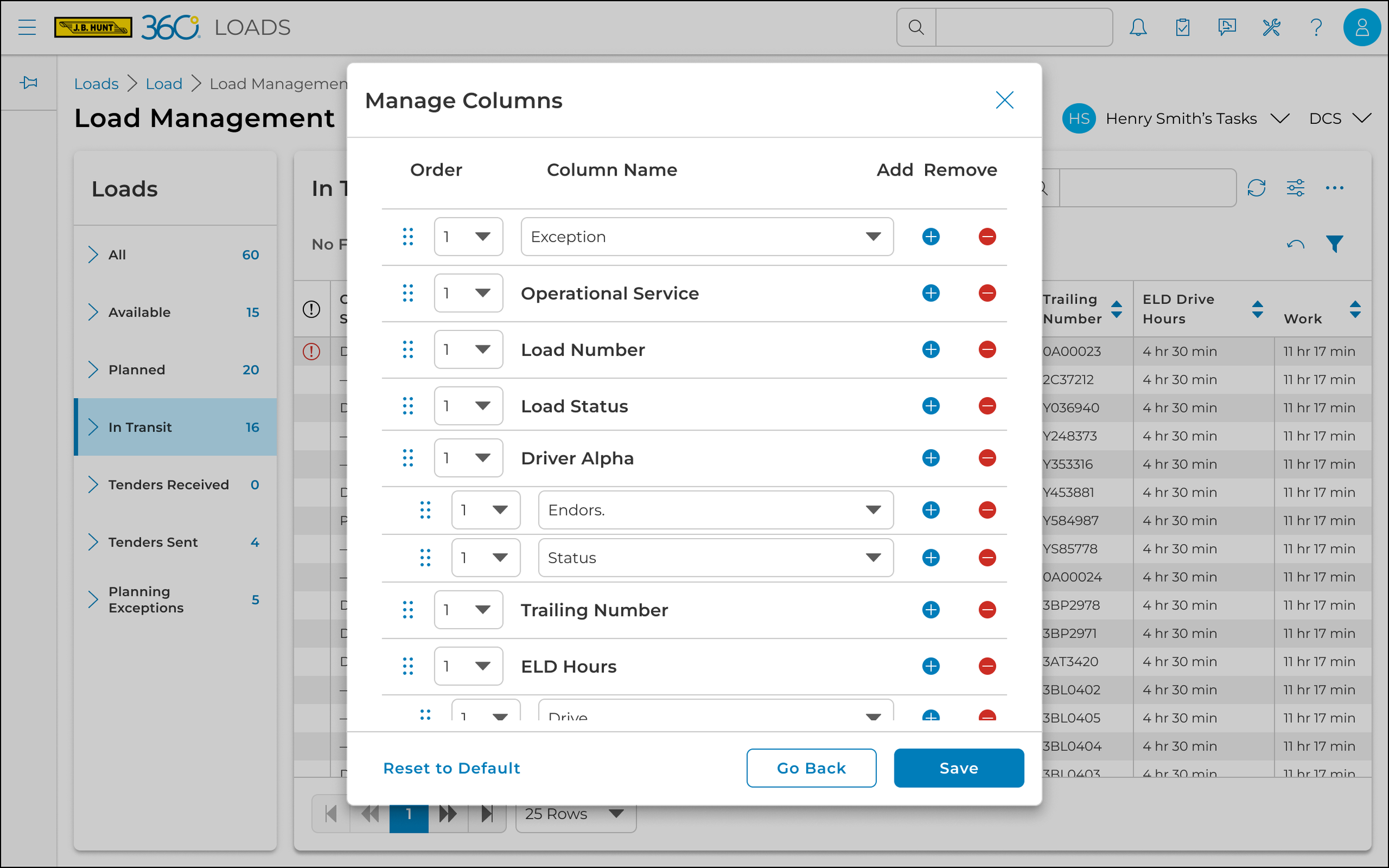
Users need a modern Load Management experience that is fully accessible, fast, and easy to navigate. The interface should support simpler workflows that reduce cognitive load, paired with an intuitive layout that makes key actions immediately clear. To accommodate different working styles, users also require full control of column management so they can customize the information they see and prioritize what matters most. The system also needs to be fast and responsive, ensuring users can complete tasks efficiently without the friction of the legacy tool.
Outcomes
The desired outcome for the modernized Load Management tool is a faster, more intuitive, and fully accessible experience that eliminates the friction of the legacy system. Users should be able to navigate simpler workflows, customize their views through flexible column management, and complete tasks with greater speed and confidence. The redesigned product aims to improve overall usability, reduce errors, and support a more efficient operational flow. This gives the Transportation Managers and Dispatchers a tool that feels modern, reliable, and aligned with their real‑world needs.
Process highlights
Project plan and responsibilities
Product team
Consisted of: UX designer, UX Researcher, Product Owners, Business Analysts, Developers
Methodology
Strategic design thinking-driven product development.
My responsibilities
Business Strategy, UX Design, UX Research, Facilitation.
Project plan
Work to understand the needs of all seven teams involved in the project, meeting with business partners to clarify their priorities and proactively identify areas of conflict before they reach the product teams. Interview users, support research, and facilitate cross‑collaboration sessions to align stakeholders and establish a clear plan of action. From there, compile the findings and draft a comprehensive proposal outlining my recommended direction for the product.

Estimated Outcomes
The redesigned Load Management tool is expected to deliver a faster, more intuitive, and fully accessible experience that removes the friction of the legacy system. Users will be able to navigate streamlined workflows, customize their views, and complete tasks with greater speed and confidence. These improvements are projected to reduce errors, increase operational efficiency, and provide Transportation Managers and Dispatchers with a modern, reliable tool aligned with their day‑to‑day needs.
Results
The streamlined load management process enabled teams to move more loads in less time, directly contributing to increased operational efficiency and higher profits. Usability testing validated the redesigned workflows, boosting internal employee trust and confidence in the product’s direction. Post‑launch tracking through Google Analytics and Microsoft Clarity confirmed strong user engagement and verified that the new experience delivered measurable improvements in speed, clarity, eliminating pain points, and task completion.